Thursday, 12 December 2013

Introducing... Tick & Tock

Well I don't know what to say! The last 6 months of this year have been absolutely crazy here in the Reptile Room (notice it's no longer just called the Snake Room? You'll see why). As well as hatchling season coming and going, and looking after 65 little snakes, there has been lots of other work going on, with LOTS of new residents joining me. My free time is still at an all time low, so to update you on everything over the last half of the year would be as painful for you as it would be me - so I'll do things one bit at a time, and give each of the new residents their own introduction, which will keep things short and sweet.

Ok first up, say hello to Tick and Tock, the Red Eyed Crocodile Skinks (Tribolonotus Gracilis). These are very much the result of a chance encounter - I'd never even heard of this species before, and just happened to spot a picture of one which gave me a definite case of "wow" - I'd never seen anything like them!
Lizards aren't particularly my thing, generally, but the crocodile-like appearance of these, coupled with their red eye masks (hence their name) really struck me, and I actually think they look more like miniature wingless dragons, with their prehistoric features and ridges of horns down their backs.
So, out of curiosity more than anything, I set about doing a little bit of research on them, and it turns out they not commonly kept in captivity as pets, which Is why I'd not seen them before, and consequently, information on them is a little patchy and inconsistent, to say the least. I figured if I was to try and find a pair, I'd have my work cut out - and be prepared to part with a nice chunk of cash too - but I'd keep my eye out and maybe see a pair for sale somewhere in the new year maybe.

So over the next couple of days I set about doing my homework in terms of their care and habitat requirements, as well as their overall behaviour and ease of keeping, and I figured that although I have no prior experience with lizards, they don't seem overly fragile, so perhaps I could manage with a couple of these. Then as a massive stroke of coincidence, a pair were advertised up for sale, complete with enclosure, and only 30 miles away too! Well, an hours drive later, and Tick & Tock (named after the crocodile in Peter Pan) were in my nervous care. And that's why it's not longer just a Snake Room.

Tick and Tock are still settling in at the moment, and I don't see a great deal of them - but they're a fascinating pair of critters! I have set up a nice enclosure for them with lots of coverage for them to pick and choose where they hide, deep soil substrate for them to dig new burrows, and a large shallow waterbowl for them to have a paddle around in - which they do nightly, given the amount of soil they leave in there for me to clean out. Their only special care requirement which sets them many other lizards is their need for constant high humidity yet relatively low temperatures, as they come naturally inhabit cooler tropical areas, so their enclosure has been adapted a little to retain as much moisture as possible.

They are very much a hands-off species and can find handling a little stressful, and have a party trick of playing dead when threatened - which I'll admit did panic me the first time! I tend to keep handling to a minimum and just leave them to their own devices, but if I'm lucky I occasionally catch sight of them at lights out. Over time, they may become more confident and begin venturing out in plain view a little more, but we'll see, and if not then that's fine too. I'll certainly enjoy catching fleeting glimpses of them in the night - and making roaring noises in my head ;)

Thursday, 17 October 2013

Hectic Schedule!

Ok I have 50 minutes before I need to start feeding the Royals, so thought I'd squeeze in a very quick blog. As you may have gathered, I'm very busy lately - looking after 65 hatchlings, plus the other residents of the snake room really takes it's toll on my free time (free time? What?), with something needing doing pretty much every night, and usually most of the weekend too - usually feeding and / or cleaning.

On the subject of feeding: It's pretty common to get a few none feeders out of a clutch of Corns, and hatchling Royals are notoriously difficult to get feeding - well that's certainly been true here! Of the fist clutch of Corns which hatched, most of them took their first feeds without a problem, and as the weeks rolled by more and more caught up too. Except one. Stubborn little number 8. After two months (and all the other clutches had hatched and mostly fed in this time) he had still not fed of his own accord, so I was forced to take matters into my own hands, and resort to force feeding him. This was after trying just about every trick in the book with scenting and prepping pinkies, to no avail. I initially started off force feeding him bits or rat tail and chick legs, before moving up to small pinkies. The first attempt actually wasn't as dreadful as i was expecting, and he took to being force fed with no real issue, and kept it down too. Unfortunately I'm still continuing with this on a weekly basis, but it gets easier (and I think less stressful for him) on each attempt, so I'm hoping he'll strike or drop feed of his own accord any day now. The second clutch to hatch also produced 3 none feeders - this is hardly surprising and actually a lot better than I was expecting, due to the large number of hatchlings from this clutch (27) and their tiny size. The three none feeders had their first force feed this week, which again, went without any real issue. They are a lot smaller than #8, so I'm really glad I've had the opportunity to get the practice in first on a slightly larger hatchling, as I think I may have struggled here without a little prior experience. The third clutch however have been great and all feed with regularity, so no issues here.

The Royals, however, are being little buggers...typically. I shouldn't complain, as it's to be expected, and what I've come to learn is that a lot of breeders actually get their hatchlings started off on live mice - but it's not openly spoken about all that often. I'm really not comfortable with the idea of live feeding, so this will always be a last resort option for me, for if all else fails. Two are actually strike feeding reliably and are now ready for their new homes. Another one sometimes strikes, but often doesn't, so it's work in progress with him. The other 5 however, are being assist fed at the moment. It's not actually that bad, and again, gets easier with each occasion - a couple of them actually constrict my hand when they're feeding too (which is kinda cute). I'm confident they will strike feed soon, it's just a matter of patience, and trial and error in terms of prey type and size. Now that they've all had a few feeds, and can give drop feeding another go, so we'll see how the next few weeks turn out. All of the hatchlings from this clutch have been reserved, with some very anxious people looking forward to receiving their new snakes, so I'm hoping I don't have to keep them all waiting for too long - but it takes as long as it takes.

And on the subject of sales (that was handy wasn't it!): It's going pretty well! I mentioned in my last post that many people have difficulty selling Corns, and this is true - they are cheap to buy and easy to breed. Right now there are lots of people in my local(ish) area alone that are also selling hatchling Corns, so it's easy for people who are wanting to buy one, to find one. I'm quite fortunate in this respect - I make a couple of sales a week, and to very good homes too. Most of the first clutch have all been rehomed now, and a few from the other clutches too. Again, there's no rush here, and I even turn some sales away if I'm not confident in the persons experience or knowledge in keeping snakes - I'm certainly not desperate to sell them as I can house them for many months yet, so I won't just offload them to anyone who asks. If it means that they go to good homes where they'll hopefully live long and healthy lives, then once again it takes as long as it takes.

Well that pretty much wraps it up. I do have some news to share in regards to an influx of new additions a couple of weeks ago (and a hectic week in setting up homes for them), but I'll save that for another day when I have more time and some decent pictures of them. Right, must dash, feeding to do. Ciao :)

Friday, 4 October 2013

End of Season

Now that everything has hatched for this season, and the incubators are empty and switched off for the year, I thought now would be a good time to have a little catch up. This season - my first breeding season - has gone brilliantly as far as I'm concerned. The breeding process for both the Royals and the Corns has been like clockwork, despite the initial delay in confirmed locks between the Royals - eggs were laid exactly when expected, and I was able to predict with relative accuracy when each clutch would hatch. Out of a total of 65 eggs laid over 4 clutches (one from the Royals, and three lots of Corns) only one egg was lost, giving a successful hatch rate of 98.5%. The total countup for the season is;

Corn snakes;

  • 6 Carolinas
  • 6 Amels
  • 36 Anerys
  • 8 Snows
Royals;
  • 6 Fires
  • 2 Normals

I am obviously really pleased with the overall result, and am pleased to say that most of the hatchlings are doing well. There are one or two stubborn feeders that are proving to be difficult to get started on frozen/thawed pray, but this is really to be expected with large clutches, and the none-feeding blues is a topic I'll touch on another day. Additionally, all the mothers are doing great, are in fantastic physical condition - in fact you wouldn't even know that they'd been through the trauma of egg laying! Monty (female Royal) is back up to the weight she was before she laid and is feeding with continued aggression, and might be back in for another season next year. The Corns are preparing themselves for their annual brumation at the moment, but will be given next year off from breeding.

It's been a hectic year all in all, and a massive learning curve - plus the rush and expense of getting everything set up to accommodate such large numbers of snakes - but all in all I really have very few errors to iron out, and I don't think I'll be doing anything much differently next season, with the exception of delaying the pairings of Royals until a little later.


For now however, before the next season begins, I'm extremely busy with the results of the season gone - or more accurately, the routine of feeding, cleaning, and selling of 65 little snakes. I think it's important mention this, as it's not something that's often spoken about, and I feel many people wade into breeding without much thought as to what happens after everything has hatched. My daily chores have gone through the roof, at the expense of my free time. Looking after 65 young snakes on top of my original snake room residents keeps me very busy, with something needing doing pretty much every night - hence the lack of updates recently!! Corn snake hatchlings require cleaning and feeding twice a week, or every 4-5 days, so there is always paper to fold and waterbowls to scrub. Of course, pinkies are consumed by the 100 in a very short time - and certainly initially at least, I was paying for these out of my own pocket.

Corn snakes particularly are arguably over-bred in captivity, mostly by hobbyist breeders such as myself. Unfortunately many of these are by people woefully under prepared to house and feed large numbers of snakes, sometimes as a result of co-habiting mixed sexes, and as a result the market place is quite saturated. Often people will wade into breeding with a completely unrealistic view of making money - the reality is that many people often struggle to sell or even give their young snakes away - resulting in petshops and rescue centres bursting at the seams with them. I have been lucky in this aspect - the Royals were all reserved as soon as I had sexed them, and with the Corns I sell 2 or 3 a week, most weeks. It's certainly not a quick process - I put a lot of work not only into looking after all the little snakes, but also into listing them for sale and responding to advert enquiries - as well as vetting the people who have contacted me. I can't force people to keep snakes exactly as I keep them, and nor would I want to, but I can make the decision as to whether I want to hand over one of my animals to them, and unfortunately, sometimes the answer is no. I have sold quite a lot at this point, and I still have many to go, so I imagine I'll be looking after lots of hatchlings for quite some time yet.

It's important to remember that by choosing to breed your snakes, the results are your responsibility - to house them appropriately (separately), provide heating, feeding, and cleaning. This will all be at your own expense, both in terms of time and cost, certainly initially anyway. It will not be an overnight thing - expect to house hatchlings for many months, and don't get too carried away with illusions grandeur of making much (if anything) in the way of profit either. It's not all fun and games - these are completely dependable animals we play with.

But this makes it all worthwhile ;)

Friday, 6 September 2013

Hatchling Season

Well, I'm not sure where to even start. It's been so long since I last wrote, I just had to have a little skim-read to check up on where we'd last gotten to. I'll try to do things in order.

Firstly, another update from the Corns: As I last wrote, my first clutch had just hatched giving a mix of Snows, Amels, Anerys and Carolinas - which confirmed Cornerlius (the male) as an Anery. Rory (the gender confused female) had also laid a second clutch a few days prior. Well I'm pleased to say that those eggs are still doing well, and even though one of the eggs was a "boob" (not fully calcified) and developed a mouldy patch, application of a little sphagnum moss soon sorted this out and stopped it in its tracks, and all eggs have gone full term. Today marks day 60 actually, so I'm expecting this clutch to pip any day now, giving another mix as per the first clutch.

Cornelia, the female Anery that laid a massive 28 egg clutch is now a proud mother too. Her clutch went full term despite the tiny eggs, and 27 out of the 28 eggs hatched out tiny little Anery Corns. Unfortunately one didn't quite make it any further than pipping and died soon after - but thankfully the other 27 all hatched out just fine and are as healthy as can be. Incubation of this clutch coincided with the heat wave of summer, and a few other breeders experienced whole clutches of deformed hatchlings that had to be culled. Fortunately, I avoided this, thanks in part I think to me taking the decision to turn the temperature of the incubator down a little to stabilise temperatures. A huge sigh of relief when they all emerged!!

And now for the bit that I've been eagerly waiting for for over 18 months now: The Royals! Monty (female normal) did me proud, as you may remember, laying a whopping 8 eggs as a first time mum. Everything about this season has been like clockwork, right from day one - and true to form the incubation was no different either.
On day 59, I was greeted by the sight of the first one poking it's nose out of the egg and blowing snot bubbles. Things work a little slower with Royals than they do Corns - where as with the Corns all are out of the eggs within 48 hours of the first pip, with the Royals this took the best part of a week. A week of biting my fingernails down to the flesh, and sat in front of the incubator near-constantly, watching it like a television. Eventually, they all pipped, retreating back into the eggs for a couple of days, before fully emerging.


The total count up in the end, as a bonus to the 8 healthy little hatchlings, was a very impressive 6 Fires (3 males / 3 fermales) and 2 Normals (1 male / 1 female). Ifrit (the father) did well it seems, and it's great to see that the strength of his genes has transferred to the offspring. He is one of the best examples of an adult Fire that I've ever seen - and I'm not just being bias here, he really is. The hatchling Fires have blown me and a lot of other people away. Sometimes the difference between Fires and Normals can be quite subtle to the untrained eye - well not this time.

Well that just about wraps things up for today. I still have so much to update you all on, such as how feeding is going for all the little ones, my new racks that I build to house them all, and a couple of exciting new additions to the room - but unfortunately looking after over 65 snakes is really taking it's toll on my free time at the moment (hence the lack of updates these last few weeks), so I'll save it all for future days.

I need a holiday...

Friday, 12 July 2013

A Nice Surprise...

Firstly, my apologies - this post is a little delayed, it's been a very busy week, and you'll soon understand why.

As I ended my last post, I mentioned that Rory (female Amel Corn) was looking very close to laying a double clutch, after laying her first clutch 5 weeks ago. Double clutching is fairly common in a good condition female, but the odds of these being infertile (slugs) is increased. Well, I'm pleased to say that a couple of days after writing, I decided to have a rummage in the nest box, as I'd not seen Rory that day, so my suspicions were aroused. After carefully removing some moss, I found 13 neatly laid healthy lookijg eggs, ready to be placed into the incubator. All have candled fine, so that's a nice bonus!

So then on Monday, I come home from work, and set about doing my evening checks - which basically involves wandering around with a temp gun and a jug, opening vivariums and tubs to check temperatures, looking out for excretes for spot cleaning, and topping up waterbowls. I always have a look in the incubator, just to check everything is working as should be and humidity is good, and then just as I was about to close the door, I spotted... something...


 Sure enough, a little Corn snake pipping away out of the shell, right on day 56 of incubation. For a few minutes, due to the initial excitement, I failed to even notice it was pink - this is (or rather, was supposedly) from an Amel x Charcoal pairing, so all hatchlings should have been Carolinas (normals), which are a dark chocolatey brown in colour when first hatched. After a quick bit of identification work with some help from the knowledgeable folk on RFUK, it was decided that this little hatchling was in fact a Snow - which is a mixture of Amel and Anery. We know that Rory is an Amel, and we thought that the sire, Cornelius, was a Charcoal, but the pipping of this little hatchlings proves that he is actually an Anery instead.

What's more interesting, and a complete surprise, is that both Rory and Cornelius are carrying a hidden heterozygous gene of each other. As, on a whole, Corn snake morphs are generally recessive genes, both parents must be carrying genes for the offspring to inherit and visually display them. This mean that Rory is actually an Amel, het. for Anery, and vice-versa; Cornelius is an Anery het. for Amel. Hidden hets are impossible to determine visually, and must be proved out by breeding - as is the case with the little Snow above. This has come as a very nice added bonus, and a complete shock.

Over the next two days, the other little snakes we're not far behind, with a new one pipping every hour or so, and a variety of different coloured heads poking out - confirming the new genetic identities of the parents, with a mix of more Snows, Anerys, Amels, and Carolinas. Soon enough, the first one was out of the egg and racing around the incubation tub, followed closely by the rest of the offspring. By the Wednesday, all eggs had hatched, giving me a 100% hatch rate with no defects (which is a huge relief), and a nice mixture of little Corn snake morphs.

All hatchlings are now housed individually in the hatchling rack I've just finished building, and are getting ready to go through their first shed - after which they'll all be offered their own feed, which I'm keeping my fingers crossed for being a drama-less affair.

The next clutch is due to hatch sometime in the first week of October, from Cornelia - so this will now be an Anery x Anery pairing, which "should" result in all-Anery hatchlings... unless we're in for any more surprises. This does of course mean that my plan for breeding Blizzards is now out of the window, but I'm equally happy at the surprise clutch of Snows - especially since I've just saved three years proving Cornelius out - and I will of course be keeping one back for myself. The hard bit will be deciding on which one...


Thursday, 4 July 2013

Bumper Clutches

As I was nearing the end of writing my last post, Cornelia (female Anery Corn) was right in the middle of laying her eggs, so I left her alone, finished off the post, and checked in on her the next morning - I like to leave the snakes for at least 12 hours after I think they've finished laying, just to make sure I don't stress them out too much and increase the chances of egg binding if there are a stray couple of eggs that they are taking their sweet time to lay.

So here's what lovely sight I was greeted with the following morning: A whopping clutch of 28 lovely plump eggs. Their a little on the small side - much smaller than Rory's clutch, but I can hardly say I'm surprised, what with there being nearly twice as many in all. This girl was in great condition prior to breeding, which is evident in her clutch size (even if it did make it a little tricky to palpate her), but I'm even more pleased to say that she has remained in great condition after laying eggs, carrying a large portion of her weight and size with her - which is a relief, after seeing how Rory looked after her clutch.

And here they all are in the eggs tub. All eggs have been candled and are looking good to date - I'll candle them again in another couple of weeks, but at present I have no reason to suspect that any are infertile. Having spoken to a couple of breeders that I know, it seems that this clutch of 28 is the largest of this season to date, or certainly of the people i have spoken to - so I'm obviously really pleased with how this season has turned out so far. I'm very much looking forward to this clutch hatching too, and this pairing confirms Cornelius's genetics - either as an Anery, or a Charcoal. We'll find out soon enough!

And it doesn't end there. Monty (female Royal) has been showing all the right signs of getting ever closer to laying eggs over the last month. The last time I wrote, I had prepared a nest box, and Monty was laid on her back - which is a sign of been very close to laying, and positioning the eggs before the big day. In the latter stages of follicular development back when it was possible to palpate her to count for potential eggs, I thought (with a heavy emphasis of distrust) that I could feel 8 large follicles, but this being her first season, I was expecting 4 really, as this would be a realistic clutch for a first season.

Well, bang on day 30, I return home to find...

After carefully removing her from the clutch and temporarily popping her in a tub, a quick count up revealed 8 large eggs, with a total clutch weight of 705 grams. I had to recount a few times as I couldn't quite believe the result! She had decided to lay them inside her hot hide rather than in the nest box I had prepared, so they were a little sunken from being dehydrated, but nothing drastic, and nothing that a few days at the high humidity of the incubation tub hasn't fixed. As the eggs had been laid in a pile and had been allowed to dry together, I decided to to attempt to separate them, and have placed them in the incubator as they were found.

This is a brilliant result from any female, but almost unheard of from a first time mum at her young age - and I think it goes some way to proving that the overall condition and health, as well as a healthy balance of overall size, muscle tone and body fat pays off. As well as being obviously very pleased at the result of the count up, I extremely pleased with just how well Monty looks after laying this clutch - she looks almost as good as she did before she became gravid, and weighs in at 1350 grams. She has resumed eating with her previous aggression and reliability, and will be back up to her former size in no time at all.

Well, this just about wraps up my season this year at a total egg count of 51 - it's looking increasingly likely that Rory (Amel Corn) will double clutch, with her eggs expected any day now, but the odds of these being infertile are quite high, so we'll see. Either way, I'm amazed at how well this season has gone for me, and I'll be back shortly with news of hatchlings.

Saturday, 8 June 2013

Sheds and Eggs

It's been a while since I last wrote, so I thought now would be a good time for an update on the season so far - and it's gotten very exciting!

Firstly, Monty (female Normal Royal), is very close to laying eggs. Last time I wrote I mentioned that she had ballooned in size and gone through a colour change, and was approaching a shed cycle, which I cautiously assumed was to be her final shed before laying eggs. Well I'm very pleased to say her behaviour since then has been very encouraging - she has been refusing food for a couple of months now, and for the last week has been laying on her back and contorting her body - this has filled me with confidence that she is very close to laying eggs.

In preparation for the event, and in order to minimise the risk of any laying issues such as egg retention/binding, I have made a nest box for her to lay in. This is a 9ltr RUB partially filled with sphagnum moss, with a little ventilation and a large entrance added to the lid, and placed in the vivarium. This should ensure she has somewhere comfortable and secure to lay her eggs, and the soft moist properties of the moss prevent her from getting any bark stuck in her vent during / after laying. The humidity of the nest box will also prevent the eggs from drying out before I can move them into the incubator.

I'm pleased to say she has been using the nest box near-constantly since I placed it in the cool side of the vivarium, and I'm hopeful she'll use it to lay her clutch in. Sunday 16th of June marks the 30 day point from her pre-lay shed, so not too much longer now.

Moving on to the Corn snakes now: The last time I wrote, Rory (female Amel) had completed her pre-lay shed and was scouting round her vivarium for somewhere suitable to lay. Well, on May 10th I came home from work to find...
 ...a nice healthy looking clutch of 15 pearly white eggs, laid in the nest box with Rory looking quite defensive of them. Thankfully removal and transportation to the incubator was without issue, and all the eggs are showing healthy veins when "candled" with a torchlight held against them. This clutch should be due to hatch some time around the 5th of July.

I think it's important to touch on the negative side / risks of breeding, as it's not all excitement and anticipation - it comes with a degree of worry and concern too. Rory looked like crap after laying this clutch - very skinny, like a liquorice bootlace. She had only eaten 3 mice since coming out of Brumation in March, and prior to that stopped eating in October, so she wasn't carrying as much weight as I would have liked her to have, and used up the weight she did have in building and laying eggs. Additionally, something odd happened to her eye - it went very cloudy beneath the lens, at the back of the pupil. Observing her behaviour as the moved around the vivarium in the days after laying, I became increasingly concerned that she had lost her eyesight, as I noted her wandering aimlessly and bumping into objects, seemingly unable to find entrances to hides and coverage. She also seemed completely unaware of food being held right in front of her, bumping into it and recoiling in surprise. It's fair to say that breeding / eggs laying had taken it's toll on her, and I was quite worried. I'm happy to say that since gingerly taking a feed a few days after laying, she has continued to feed with enthusiasm, returning to her normal self and picking up nicely. Her eyesight has returned, the cloudiness to her eye has disappeared, she is putting on weight nicely with increased feeding, and looks a thousand times better than she did in the days after laying - in fact having palpated her stomach a few days ago, it seems she is not far from laying a second clutch. I'd rather she didn't double clutch as I'd much rather continue to build her back up, but it's out of my hands. They may all be slugs yet, but if they are viable I'll consider it a bonus, just so long as Rory continues to bounce back into health.

Moving on to Cornelia (female Anery Corn): I intially thought I'd missed the boat with this pairing, so to speak. Due to bad timing of pairing the male with Rory, and his rest days coinciding with alternating shed cycles, I didn't get as many opportunities to pair this couple as much as I would have liked to in the initial weeks following from the post-brumation shed, so I was beginning to think that it wouldn't happen for her this season. Well, it seems I was wrong once again - around 2 weeks ago I felt a string of eggs being developed, and shortly after she went into shed. She's a little late following her pre-lay shed, but I'm pleased to say that - as I write this - eggs are currently being laid: 7 so far, all looking good, with what looks to be at least the same again to come. Update to follow.

As a final update: There have been a couple of new additions to the Snake Room over the last couple of months. Firstly, there is Jack, a late CB12 male Cinnabee (cinnamon+spider) Royal python. He is my first 2-gene snake, and I have big plans for him next year. He's doing quite well at the moment, feeding with a degree of consistency and growing slowly but surely. Next up, is a CB10 female Green Phase Western Hognose. She hasn't been named properly yet - still working on that. She's very hissy and aggressive, as all good hogneses should be, but she calms right down once you pick her up - that's what I love about Hognoses, so much character packed into a tiny snake. Depending on how Little Hank (male Hognose) grows this year, I may consider adding her to my breeding place for next Spring too.

Well, that brings us fully up to date - the next few months are going to be busy with more eggs, and my first hatchlings in no time!

Tuesday, 30 April 2013

Countdown!

I'm like a kid waiting for Christmas at the minute, as the countdown to eggs is well under way! Firstly, Monty (female Royal) is looking fit for bursting. I didn't personally spot ovulation, as A: this is my first season so I'm not too sure what I'm looking out for, and B: she's spending the majority of her time in the hot hide now, so I'm just leaving her alone.

Not long now!
Her size, however, has ballooned over the last two weeks, with her lower half now extremely bloated and almost solid to the touch - further palpating is now impossible. Additionally, the colour change to her appearance has continued, as she's coming out in some lovely light tones and blushings. 

Her belly is showing the tell tell signs of approaching shed very soon, which coupled with all the other signs, I'm taking as being her pre-lay shed, which she should start going into in around 4 days or so. As soon as she has completed her shed, I'll be putting a moss box into her vivarium which she'll hopefully use as a nest for laying her eggs in. So in around 45 days, I could have a few eggs!


Additionally, the Corn snakes have been busy. Rory (female Amel) completed her pre lay shed yesterday, and is now scouting round her vivarium, presumable looking for somewhere good to lay her eggs, which could be with us sometime this week. She also has a moss box and keeps going in and out of it, so I'm hoping she chooses to use it - this will make removing the eggs so much easier and also stops them from drying while I'm in bed or at work.

Meanwhile, Cornelia (female Anery) has been paried a couple of times with Cornelius (male "Charcoal"). I'm particularly looking forward to this pairing as it will put to bed my doubts on whether the male is actually a Charcoal, or an Anery - if the hatchlings from this pairing are dark, then he's an Anery. If they are Carolina / Normals, then he's definitely a Charcoal - which makes Rorys hatchlings 100% het for Amel and Charcoal - the genes required for Blizzards, which is a long term project of mine. She isn't showing any signs yet, but if she follows the same schedule as Rory, she should be going into her pre lay shed sometime next week.


The incubator is on and up to temps, and vermiculite has been mixed. Bring on the eggs!

Friday, 12 April 2013

Go Go Go!!

I've been a little busy recently, what with the work on the website and Facebook page, and bringing the Corn snakes out of brumation, but time for a quick update on where we are.

Starting with the Corns - it's been a busy month with them. I brought them all out of brumation during February and gradually warmed them up throughout the remainder of Feb. After giving them a couple of weeks to wake up properly, they were all offered a feed - and I'm glad to say they all took the opportunity, making this their first meal since October. The male began his shed cycle at the end of March, with the female not too far behind him - the other female is just going through hers now. The post-brumation shed marks the start of their breeding cycle, so once they'd both freshly shed, I gave them another few days, and popped them in a breeding tub.

The difference in the courtship ritual of Corns compared to Royals is amazing - very aggressive, and very fast! I popped the female in first, and before I'd even got the male in the tub, he instantly started to "fight" with me, becoming very aggressive and twitchy. Once in, he instantly made a bee-line for the female, and began positioning himself on top of the female - she didn't take too kindly to this, so they spent the next 10 minutes chasing each other around and thrashing it out, with the male keep his head constantly just behind hers. And then... (look away now if you're easily grossed out)...

Yep, that's Corn-porn right there. Sorry about that, but you know, I'm trying to be all educational and whatnot. The "lock" lasted for about 10 mins, and then it was all over and done with. I used kitchen roll in the breeding tub, as evidence of copulations will appear as a yellow smudge on the paper - obviously no evidence was required here! I paired the two again later in the week, and once again, the courtship process was immediate, with another successful lock. I'm going to aim for 4 successful locks with each female, and with a little luck, in around 30 days time I should have the first clutch of eggs.


There has been some development from the Royals too, or more accurately, the female (Monty). As you know, I've been pairing her with my male Fire (Ifrit) since November, observing the first lock on Dec 27th. Since then, I've continued weekly pairing, averaging at about 2 locks per month. I've been tracking the development of the female closely throughout, and attempted to palpate, or physically feel for developing follicles on several occasions. There have been a couple of time where I've thought that I'd felt something, but couldn't be sure. Well, it seems we have some progress. My suspicions were aroused a couple of weeks ago, when she refused a food offering - this has never happened before. This was repeated 2 weeks later with another feed attempt. In other behaviour to note, as well as the none feeding, I've also noticed her become more active in the vivarium recently, and spending more time at the hot end.

In terms of physical development; well this is where it gets really interesting. I've keeping a close eye on her build throughout, and  I've suspected her to be gaining weight in the lower half of her body, despite to recent refused feeds. She appears to be going through a colour-change at the moment, getting progressively lighter in tone with more blushings appearing to her pattern - at first glance it's not so easy to distinguish her apart from the Fire. I brought her out of the vivarium earlier this week for a proper check over, and got a shock to see the true size of her - she's developed a beer belly overnight! There is an unmistakable bloat to her underside, from her halfway point to a few inches short of her vent. I thought this would be a good time to attempt to palpate for follicles again, and felt 8 very large ping-pong ball size lumps, spaced evenly in the lower third of her body. Compared to prior palpation attempts, this was a world of difference, leaving me with little doubt that she is on the way to producing eggs.

Time for a look at the chart:

Comparing the behaviours and physical signs observed this week (large follicles, refusing feeds, and actively heat seeking) to the timescale of the chart above, it would seem these tie in somewhere in between the latter stages of follicle maturation, and ovulation. I'm anticipating signs of ovulation any day now, and for her to begin going through a shed cycle in around 30 days or so. Ifrit has timed his shed cycle perfectly - this is his "go go go" time. Monty should fertilize the eggs with the sperm she has stored in her special pocket from previous locks, and may reject any further locks attempts - but it doesn't hurt to have him present for any additional copulations where required, so for now, pairings continue.

So that brings us up to date. I'm not going to start counting my chickens just yet, as it isn't unheard of for all the right signs to lead to nothing, but at this stage it is all looking very promising, and I'd be lying if I said I wasn't getting a little excited - in as little as 60 days we could very well have eggs! Remember to check back soon for further updates.

Saturday, 30 March 2013

Brumation

As all of my Corn snakes are now awake and feeding after their annual nap, I thought now would be a good time to go through what brumation is, why and how I brumate my snakes here. It's another lengthy one, so go put the kettle on :)

What is brumation?
Brumation is, in simple terms, the snake equivalent of hibernation. Many temperate species of Colubrids, particularly those from America such as the Western Hognose and of course Corn Snakes carry out this form of hibernation as part of their natural seasonal behaviour. As snakes are cold blooded, they require heat from their environment in order to digest food. In the winter months when temperatures are much lower, they have adapted to survive the season by becoming almost dormant in order to conserve energy, meaning they do not have to eat and therefore do not require high heat to digest food. Interestingly, and unlike true hibernation, brumating snakes are not asleep - they are alert and fully aware of their surroundings, they are simply less active, lowering their heart rate down to as little as 5%, and shut down their digestive system, liver and kidneys almost completely - as a result, they loose very little weight despite not eating for up to 6 months. They continue to move around, albeit with much reduced frequency, and continue to drink water throughout.

Brumation is triggered in late autumn with reduced daylight hours and lower daytime temperatures. This lasts throughout winter, until early/mid spring where daylight hours become longer and temperatures begin to rise again. The end of brumation also marks the start of the annual breeding season.

Captive bred snakes do not experience a seasonal shift in day time temperatures of course, but they can often begin to instinctively prepare themselves for brumation regardless, perhaps triggered by fewer daylight hours, or cooler night time temperatures. It is very common for them to begin rejecting food in autumn, and become very inactive. In these instances it is actually safer and less stressful for them to be allowed to brumate properly, rather than be forced to endure high temperatures - in order to shut down their organs and lower their metabolism, they must be able to lower their temperatures. Without the correct temperatures, snakes that attempt to brumate at high temperatures lose weight due to not eating, so it is safer to allow the snake to brumate properly, rather than attempt to prevent it - brumation is a perfectly natural act which temperate snake experience and have adapted into their natural annual cycle. There are a few benefits to brumation too; it marks a natural start to the breeding season, and properly brumated snakes are linked with higher levels of fertility, improved breeding success, and the increased likelihood of females laying double-clutches of eggs. It is, however, crucial that all snakes are in tip-top health and injury free before being allowed to brumate - respiratory infections can flare up due to the lower temperatures, and injuries cannot heal due to the extremely low metabolisms.

My Method
Once again, this is an area where I found - as a whole - information readily available on the internet to be a little patchy, and very brief. I spent many hours researching things like average regional day and night temperatures by month for a handful of States where Corns are native to, as well as average precipitation / humidity by month, and daylight hours by month. I also looked at natural habitats, and other breeders guides, before coming up with my own variation on the methods. I'll set out here the stages of brumation by month.

October
Temperatures are kept at their normal 31 degrees C hotspot on a 12/12 day/night cycle for the full month. I do not provide my Corn snakes with night time heat, as they experience cool evenings naturally, so throughout this month they will become aware of the gradually lowering night time temperatures, as well as shorter day light hours. Feeding is increased slightly to every 7 days here. I also used this month to set up my brumation tubs:
Basic brumation tub

These are basic plastic tubs with secure lids. Good ventilation is important to maintain a constant low humidity - I add one row of 12 holes low down on one side, and another row on the opposite side high up - this creates good air flow through the tub. The tub is then filled about 4 inches deep with clean Aspen to allow the snakes to burrow, and a hide added too. A large waterbowl is important - brumating snakes continue to drink and fresh water must be available at all times, so a large waterbowl means I have to disturb them less frequently - plus it doubles as an additional hide. And that's it, nothing too fancy required here, but security is key. Each snake has their own tub - they should not be brumated together (even if they co-habit the rest of the time).

November 1st
Temperatures are held for a further two weeks, but feeding stops. It is important to allow snakes to fully clear their systems prior to having their temperatures lowered - brumating snakes on full stomachs can be very dangerous, so temperatures are held for two weeks after feeding has stopped.
November 15th
Now I begin lowering temperatures very gradually, turning the thermostat down 1 degrees every two days over a two week period, so that by December 1st, temperatures are down to the low 20's. I also change the day / night cycle to only 10 hours of heat / 14 hours of room temperatures. I also started leaving thermometers in various locations of the house, looking for one spot of about 18 degrees, and another below 16 degrees.

December 1st
The Corns get placed into their brumation tubs, and placed somewhere that hovers around 17/18 degrees for two weeks (top of the cellar steps for me). They are checked in on most days, and water topped up, but otherwise they are left to settle down for the winter. 
December 15th
Each snake is briefly removed from their tub whilst I give them a good check over for any signs of ill health, particularly Respiratory Infections, and clean up any last little excretes. Waterbowls are cleaned and filled up, snakes are returned, and the tubs are moved to an area where temperatures are lower than 16 degrees (cellar) - it is important to keep them at or less than this temperature for their metabolisms to shut down. Other than water changes, I wont see them again now until mid February.

Bringing the snakes out of brumation is done as gradually as it was going in:

February 1st
The tubs are moved back to the top of the cellar steps again for another two weeks, where temperatures are a little warmer, hovering between 16 and 18 degrees C.
February 15th
The snakes are moved from their tubs and back into their freshly cleaned vivariums. No daytime heating is provided here for a further two weeks - they reacclimatise to a natural daylight cycle, at room temperatures.
March 1st
Now the heating goes back on, set at 20 degrees on a 10 hour cycle. Over the course of two weeks, it is gradually increased a little each day, until a basking spot of 31 degrees is once again achieved. I'll then set the timers back to a 12/12 cycle.
March 15th
Now that all the snakes are back up to normal temperatures and increasing in activity, it's time to offer them a feed. This will be the first time their digestive systems have seen any action in over 4 months, so it's important to ease them back into it with a small prey item. Further feeds are offered throughout the remainder of March, gradually increasing in size until back onto a normal schedule.


And that's all there is to it! All snakes are back to their usual routines and look remarkably bright and healthy. They will go through a post-brumation shed after a couple of feeds - this is like clockwork; males shed after two weeks of their first feed, and females begin to shed about two weeks after that. Once all snakes have finished their post brumation shed, it's breeding time.

Thursday, 21 March 2013

Digital Scales

Firstly, apologies for the lack of updates of late. I do have a few bits and pieces to share, but nothing really that interesting, so I'll save those for another day, but I do have some updates on other areas of development here.

www.dandavisreptiles.co.nr
As we get closer and closer to the latter stages of breeding season, and everything at this point looking promising, I've started giving some thought to how best to list and advertise what could potentially be up to 70 hungry little mouths, once all are feeding reliably and looking for new homes. I'm a very active member on a reptile keepers forum which has a good classifieds section for listing snakes, but, it's a very busy section so threads drop off the bottom of the page in a matter of hours, so whilst I will advertise there, I'd rather have something a little more stable and permanent. There's always the likes of Gumtree and Preloved, but again, not exactly stable, and I'm not sure I really want to be listing my animals on "general goods" websites. So, with a little help and encouragement from a good friend and fellow snake keeper, I set about knocking up a basic website.

It's work in progress, but the bare bones of it are just about in place now - this will get fleshed out more as we move further through breeding season, but you can see the site here. As well as having a section on there that I can control directly for available hatchlings as and when they become available, I've started copying over a lot of my blogs and topics from here into a dedicated section. Over time, the topics section of the site will form a pretty comprehensive care sheet, which I can categorise and arrange into some sort of order a little better than I can here, and of course the blog will keep people updated with news of my breeding season. I'm going to keep this blog going too which will run hand-in-hand with the website, as it generates quite a lot of Google traffic, and also I quite like the informal environment of this blog.

There is also the addition of a Facebook Page which will run alongside the website, which will also be used for listing available hatchlings as and when, but mostly its just for sharing photos and updates from the snake room amongst my reptile keeping friends and acquaintances, and a way for people to keep in touch with me - so please stop by and say hello!

Well that's all for now, but I'll be back shortly with a little update on the season and a fresh housing topic, so check back soon.

Sunday, 24 February 2013

Snake Mites

So you're worried about Snake Mites? Don't be - Uncle Dan is here to help :)

What are they?
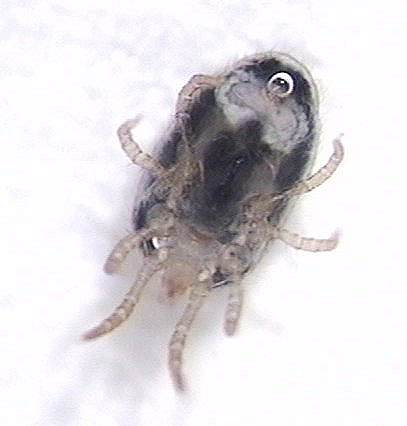
Snake Mites (Ophionyssus Natricis) are small parasitic insects that live on snakes. Juvenile mites are attracted to snakes by smell, and are dependant on snake blood in order to survive and progress to adulthood. Once feeding on the snake, they can most notably be found around the eyes and mouth, under the chin, and under the larger belly and side scales of the snake.


How can I tell if my snake has mites?
Mite under a scale.
You will most likely notice mites in one of two ways; either by observing little black specks on the snakes head or under the scales, possibly moving around, or by noticing them crawling on your hands after handling the snake. Behaviour to take note of is sudden aggressiveness or restlessness, and soaking its self in it's water bowl for long periods - it does this in an attempt to rid its self of mites by drowning them. You can often find drowned mites in the water bowl. Infested snake are also known to shed their skin with increased frequency - record keeping helps to track this.

Are they harmful?
Yes and no. As with parasites, they are solely dependant on their host being alive in order to continually feed from it. They will, however, inadvertently contribute to it's prolonged ill health - mainly dehydration as a result of blood loss, and stress. Severe, untreated infestations however can result in death due to blood loss as a result of the sheer number of feeding mites, and blood infections are not uncommon. There is some debate that mites could possibly transfer diseases between snakes, such as IBD, but at time of writing, this is unconfirmed, yet entirely plausible.

Snake Mites pose no health risks or concerns to humans or other mammals, as they are simply unable to feed from anything other than snakes. There is another type of reptilian-specific mite known as Lizard Mites (Hirstiella trombidiiformis). Snake mites and lizard mites are completely separate species, and contamination between species is rare - they will try, given the opportunity, to feed on lizards (and vice-versa) but with reduced ability and limited success.

Where do they come from?
The $64,000 question. The short answer, is you. If you find snake mites on one of your previously all clear snakes, the chances are, you have inadvertently introduced them. By far the quickest and easiest way of introducing mites to your existing collection is by introducing a mite-ridden snake to your collection - a new purchase perhaps. Mites from this snake will will move freely between snakes within relative proximity of one another, and lay eggs in your existing snakes enclosures, beginning a fresh infestation.

Another way of introducing mites to your snakes is by visiting a location that already has snake mites - this could be the home of a snake-keeping friend, or more likely, a pet shop. Mites can cling onto your clothes, or on / in the items you purchase - notably, substrate. Mites can survive for a limited time within substrate, but they did not come from the substrate - they come from the shop that sells the substrate. There is some evidence to suggest that they can survive for longer in Orchid bark substrate over other types - this is because mites require high humidity environments (60-80%) to survive, but again, they found there way into the substrate in the first place from an infested snake, and have used the substrate as a means of transport to your house.

Adult female snake mites lay up to 20 eggs per time, and can lay up to 4 clutches in their lifetime - a single snake mite can become a mass infestation in a matter of days.

Additionally, there are a whole host of rumours as to where mites come from, ranging from complete untruths, to factual inaccuracies. They do not come from dirty enclosures: Mites are a living creature, not a bacterium. They cannot suddenly manifest themselves in an enclosure by any other means than introductions. You cannot introduce mites by using branches / rocks / moss etc foraged from your garden, local park, or woods. Snake mites are not native to the UK, or found on our only native snakes (adders and grass snakes).   By all means, scrub and clean any foraged items to kill off any insects, but snakes mites are not one of them. Orchid bark gets bad press as a substrate which contains mites - this is mostly untrue. Often, what are mistaken as snake mites, are actually harmless fruit flies or flying ants. These are not snakes mites, are not in any way harmful to your snake, and simply die in a matter of days. As above, mites can survive in orchid bark for longer than aspen for example, due to the high humidity, but again, they do not come "from" the orchid bark, but from the shop.

How long do they live?
The full life cycle of a snake mite is completed in 16 to 19 days at a temperature and humidity range of our snakes habitats - this from the day eggs are laid, to natural death. Mites eggs hatch in around 3 days, and are ready to begin feeding on snakes in a further 2-3 days. Feeding juveniles progress to adulthood, and live for up to a further 2 weeks, after having laid eggs.

In order to survive, progress to adulthood and lay eggs, they must feed on snake blood. Host-less, none feeding snake mites die within around 6 days relatively warm temperatures - this includes eggs which hatch, but are unable to survive as juveniles with no snake blood to feed upon, and so cannot progress to adulthood or lay eggs. Effectively, the cycle can be broken in under a week without a host.

How do I treat my snake(s) for mites?
There are a few commercially available, tried and tested mite specific treatments available, namely Callingtons and Ardap to name a couple. Care and attention should be paid to the instructions on these products, which involve spraying your snakes enclosure to kill the mites and unhatched eggs. The active ingredient in these products is D-Phenothrin at a low concentration, which is essentially a weak insecticide, lethal to snake mites but harmless to snakes at low concentration levels. All enclosures must be treated to ensure the infestation does not return.

There are a number of home methods of treating mites to varying degrees of success - such as bathing the snake regularly to drown mites and prevent their spread, or oiling the snake down with vegetable oil or olive oil to suffocate the mites. These methods will do nothing to stop the infestation and at best will only slow it down, as mites do not lay usually lay their eggs upon the snake, but somewhere warm and moist within the enclosure.

Additionally, there is a natural solution in the form of Hypoaspis Miles. These are a small predatory mites that naturally feed on snake mites. These are commercially available under a couple of brand names (Defender being one). These are introduced to the snakes enclosure where they predate on snake mites until all are consumed, and then die in absence of a food source. Note that these are completely harmless to snakes, and do no feed on the snake themselves. The reports of the success of these mites are mixed, so whilst I am prepared to give the little critters a shot myself, my advice to others would always be to use the tried and tested commercially available products first.

Can I prevent mites?
Absolutely. Most snake keepers will experience mites in their collection at some point or another purely due to the vary nature of the hobby, and these are an entirely natural parasite, but with a little knowledge and understand as to their habits, plus some basic quarantine and hygiene practices, you can go a very long way to minimising the eventuality of an infestation.

With new arrivals, basic quarantine should always be implemented, for a whole host of reasons, as well as mites. Ideally, new arrivals should be housed away from the rest of your collection, but I know this isn't always achievable. In this time, new snakes should be observed closely for any suspicious behaviours such as soaking in water bowls as mentioned above. Water bowls should be checked for dead mites, and the snake inspected frequently for signs of mites living on it - check around the eyes, mouth and chin, and for black specks under the belly and tail scales, especially around the vent. It helps to have minimal décor and use kitchen roll as substrate during this period to spot potential mites as early as possible, and handling of all snakes should be kept to a minimum - do not handle your existing snakes after handling the new snake without at least washing your hands first, and preferably a change of clothes. There are no hard and fast rules as to quarantine durations, but I would recommend no less than a month.

I treat any other property that contains snakes as potential mite hot-spots: This includes snake-keeper friends houses, and petshops. I try to avoid handling other peoples snakes where ever possible, and once home from a friends or the petshop etc, I do not handle my own snakes without washing my hands and a change of clothes first. Regarding shop-bought substrates: as it is possible for mites to be found in bags of substrate, I simply buy any bags that I need in advance - around two weeks before needing it. I keep these sealed and away from my snakes (I use my cellar). On the off chance that there were any mites or eggs in the substrate, these will die in under a week, as they are unable to feed. This breaks the cycle, and the substrate is then completely safe to use without risk.

In conclusion:
There is a high likelihood that as a snake keeper, you will experience a mite outbreak in your collection at some point. Snake mites are not the relentless terminators they are often purported to be - they are relatively fragile creatures which simply exist to survive - this just so happens to be at the expense of our hobby and the well-being of our snakes. They are somewhat preventable with a little care, easily treatable with readily available products, and little to worry about.

Thursday, 14 February 2013

The Waiting Game - Part 2

Well here we are, mid February already - time has strangely flown by, whilst at the same time, been relatively uneventful, in terms of breeding season at least. Back when I wrote Part 1 of The Waiting Game I was waiting for just about anything to happen. Since then, and as I wrote last, locks have been plentiful and like clockwork on each introduction, but the season is still early, and there is much to look forward to yet.

I happen to stumble across this a few days ago:

This is a very good diagram of the cycle of events - with time frames - of the biological processes of the full breeding season, and gives a good visual idea as to the full duration of the lengthy process. I'll end up referring back to this diagram multiple times through this series of blogs to pin point at what stage my female is at.

Right now, I'm over to the very left of the chart. Since her last lock, Monty has been spending much longer periods of time over at the cool end of her vivarium, which could be an indication of follicles beginning to mature ready for fertilisation. I've attempted to palpate her to feel for the development of follicles, but it's not as easy as it looks. Signs that I'm keeping a keen eye out for are waterbowl hugging, and laying on her side or back - these are very good indications that she is trying to cool her body and position herself for the release of developing mature follicles.

She began her shed cycle over the last couple of days - now whilst I might be rubbish at palpating, I'm pretty sure I haven't missed the signs of ovulation and this is not the pre-lay shed, so I'll continue my pairings as normal once she's finished shedding and had another feed. This period also gives Ifrit some time off, and who knows, maybe he'll even have something to eat too, but I'm not holding my breath - he'll eat when he's good and ready. Hopefully in the coming months I'll begin to get some definite signs of progression along the cycle and be able to document some of the latter stages, begin crossing fingers and toes for eggs, and fire the incubator up!

But for now, I wait (some more).

Friday, 25 January 2013

Locks and Keys

The intuitive amongst you may have detected a slight hint of disappointment in the tone of my last post about my breeding season updates so far. I have spent countless hours scouring the internet and speaking to other breeders to better educate myself on methods for the best chances of success and the whole breeding process from start to finish, as well as making sure everything was set up in place for preparation, and crucially that my snakes were healthy and ready to breed. I began pairing them up on November 1st for three days a week. For almost 2 solid months, I didn't witness a thing - absolutely no interest from either Ifrit or Monty.

I was beginning to have my concerns. Perhaps Monty had been mis-sexed and was actually a male? Perhaps she wasn't sexually mature or ready to breed, despite her age and size, or perhaps simply Ifrit wasn't "up to the job", so to speak. I was beginning to think this years breeding season may be over for me before it had even started. I continued to pair them each week regardless, just hoping that I'd at least get some sort of sign of interest from either of them, instead of them just occupying opposite ends of the vivarium.

Then, on December 23rd, I go into the snake room after work to carry out my evening checks, to find...

At first glance, I suspect they were maybe just huddled up competing for the warmest spot, or maybe Monty is a male, and they're doing the dominance dance. On closer inspection however, I notice the positioning of their tails: That, my friends, is snake sex, or a "confirmed lock", in breeder lingo. To a veteran breeder, it's nothing to get excited about - it can take many locks before the female becomes gravid with fertilised eggs - to me however, it was the best news I could have hoped for at that point, as it confirmed for definite that Monty is a female, and Ifrit is "up to the job".

They separated a couple of hours later, so Ifrit was returned to his own vivarium, and both were fed the following evening. Coincidentally, they both went into shed at the same time a few days afterwards, so I kept them separate for the next couple of weeks off while they rid themselves of their old togs, and had another feed. I paired them back up again on the 5th of Jan, and with in a matter of hours, they were locked again.

Fast forward to this week, and once again on Monday evening I popped Ifrit in with Monty for the start of his three day cycle. Walk into the snake room Tuesday morning, and bang, they're at it again! I got myself ready for work, and left them in peace for the day. I came home from work in the evening, and they were still locked. And at bedtime. And the following morning. And that evening. They eventually separated at around 11PM - some 40+ hours after I had first caught them locked. Impressive.


Of course, there are no guarantees to breeding. It could take many, many more locks for anything to happen - if at all - but these are very healthy signs at this stage, and very assuring to me that I've at least got the basics right. For now, I'll continue pairing them up each week, and keeping a close eye on Monty. Hopefully in a couple of months (or less) I'll be able to say that I've seen signs of ovulation, and that Monty is giving the tell-tale signs of being gravid.

The incubator is on standby.

Thursday, 17 January 2013

Thermo-Regulation and Thermal Gradients - A Guide To Setting Up a Vivarium

Nearly every care sheet I've ever read states something along the lines of "Royal Pythons should be kept at a thermal gradient of 26 to 33 degrees Celsius", but rarely go into detail about how to provide this gradient, or why it is necessary - as a complete novice, just the statement its self can spark confusion. In-depth information can be found for both these questions by scouring the internet, but I specifically remember my own frustration at the mass of conflicting information regarding methods, so I'll attempt to cover this with a description of how I personally do things here. But before we get into the hows, I'll cover off the whys...

Thermo-regulation:

Snakes, like (almost) all reptiles, are cold blooded - which means they are unable to produce their own body heat, and solely rely on their local environment in order to control their temperature. They require a certain amount of heat in order to function, notably to be able to digest food. When they are too cold, they seek out heat in a manner of ways, or by "exothermic means" - some will bask in direct sunlight, some will lay on rocks that have heated up in the sun, or search out warm spots in the nooks and crannies of the landscape. When they are too warm, they must move to cooler, shaded areas to lose heat and cool down. They will often do this multiple times per day, depending on the temperatures. In captivity, there is much we can do to simulate their natural environment and behavioural patterns. Having a both warm and cooler areas of the vivarium - or a thermal gradient - is vital for captive snakes to thermoregulate.

Thermal Gradients (How-To):
After getting to grips with a basic understanding of thermoregulation and how snakes use their environment to control their temperatures, my challenge was finding a way to best provide my own snakes with the ability to thermoregulate correctly within the confines of a vivarium to promote a natural behaviour pattern. This took a few attempts of trial and error to perfect, especially in terms of bulb wattage, bulb placement, and crucially, thermostat probe placement - I cannot put enough emphasis on just how crucial a thermostat is to achieving correct temperatures and a thermal gradient within a vivarium, as well as safely controlling the maximum output of the heat source to protect your snake.

About here.
My chosen and preferred method of heating my vivariums is with ceramic bulbs controlled with pulse proportional thermostats. Infra-red bulbs come in at a close second, but I'm not a fan of the constant red glow. Heat mats inside vivariums do next-to-nothing for ambient (air) temperatures, and in my opinion do not belong in vivariums, so I'm not even going to touch on these. A 100watt ceramic bulb should be ample to heat a 3 foot vivarium. The best place I have found to mount these bulbs is on the ceiling of the vivarium, positioned at roughly one-quarter of the length of the roof, and half way between the front and the back. This should give a good hot spot temperature, as well as allowing enough room away from the bulb for the cool end to be a few degrees lower than than the warm end. Once you have secured your ceramic bulb and holder, you absolutely MUST install a heat lamp cage around the bulb - I cannot stress this enough, ceramic bulbs get incredibly hot. If a snake comes into contact with an unguarded bulb (and trust me, it will), it will cause truly horrific injuries to the snake. Please use one.

Next up: Thermostat probe placement. This was an area in particular where every man and his dog seemed to have an opinion on - I must have tried them all, and got mixed or poor results. I like to have mine secured to the middle of the side wall at the hot end, at about 2 inches higher than the substrate level. I use those little white plastic cable clips that you use for clipping wires to the skirting board to hold the probe wire firmly in place. With the probe positioned here this way, it cannot be moved around, and the snake cannot lay on top of the probe blocking it from monitoring the current temperature and affecting the output of the bulb. This is also a good place to attach the thermometer probe to monitor the hot end ambient temps - one should also be placed at the cold end. My crudely drawn diagram shows this much better than I can word it - pay particular attention to the positioning of the thermostat probe one the left hand side.


Now it's time to turn everything on, and let the bulb get up to temperature. Once the bulb has warmed up, place the thermometer probe directly underneath the bulb, and adjust the thermostat slowly until the thermometer reads 33 degree Celsius, and comfortably stays there. With the hotspot remaining stable at 33C, the temperature from the side wall to around half way along should read 30 degrees C, gradually reducing to mid 20's at the furthest point from the bulb.

So long as the hot spot is static at 33 degrees, the immediate area around this should be around 30C. I do not concern myself too much with the cold end temperatures so long as the fall below 26 degrees. Whilst this may fall below the generally advised temperature, it is important to have an understanding of thermoregulation and how snakes react to their environment - which is why I tackled the subject first. With a cold end temperature of below 26 degrees, the snake will spend relatively short periods of time in this zone, returning to the warm end for extended periods of time to absorb heat, and moving back to the cool end again to lose heat. This is exactly how a cold blooded reptile should behave and naturally would behave - and so long as they have a sufficient heat source, as well an area to cool down, they will fully utilise the provided thermal gradient available to them. Problems are not caused by having an area "too cold", they are caused by too high temperatures in the cold end, restricting the snakes ability to cool down.

As a final note, it is worth mentioning that timid Royal Pythons in particular will chose a "favourite" spot where they feel most secure, and will opt to remain in this spot regardless of their temperature. Hides must be available within both the hot and cool zones of the vivarium, and having some sort of coverage in between the two will help the snake feel secure when moving between the areas to thermoregulate - and a secure snake is a happy snake, which should in turn reduce the eventuality of problematic feeding issues. A topic I'll tackle another day.